
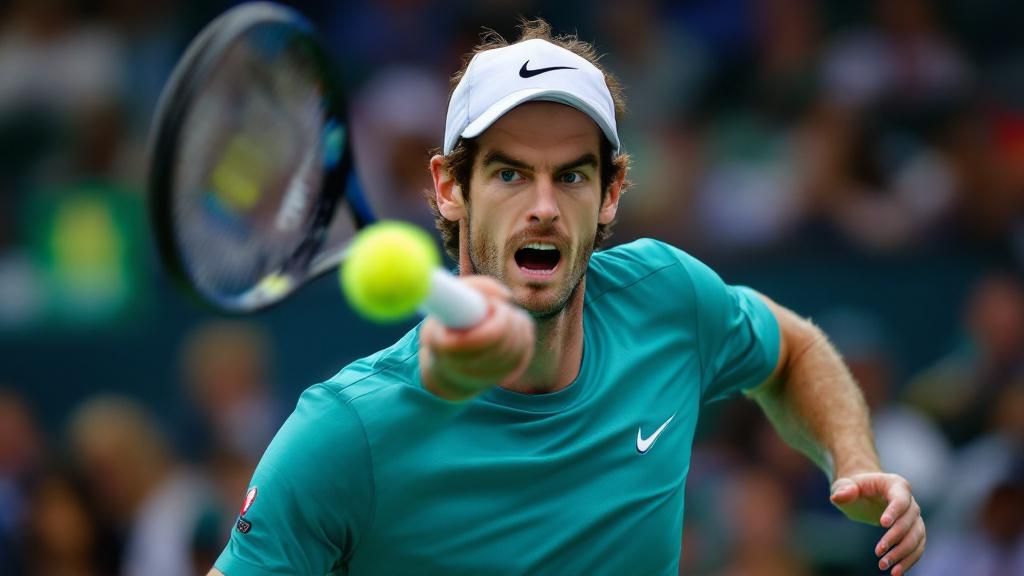
Andy Murray’s strategically designed comeback to competitive tennis has disrupted the British athletics hierarchy, indicating a potential renaissance for the nation’s most decorated player. Following his major surgical procedure, Murray’s calculated comeback to competitive play promises to reconfigure the state of British tennis, encouraging a emerging generation whilst reigniting hopes of more Grand Slam triumphs. This article examines how his careful strategy to competitive play is influencing grassroots growth, supporting rising prospects, and establishing Britain as a competitive powerhouse in international tennis.
The Comeback Champion
Andy Murray’s return to professional competition signifies considerably more than a individual accomplishment; it embodies grit and resolve that reverberates through the British sporting landscape. After enduring a career-threatening hip operation, many wondered whether the thrice Grand Slam victor would ever perform at elite level once more. His decision to stage a comeback, however, demonstrates an unwavering commitment to his game and an unconquerable determination that has shaped his competitive life. The global sports community observes with keen interest as Murray confronts this critical juncture, proving that age and physical setbacks need not determine an athlete’s trajectory or sporting aspirations.
The implications of Murray’s comeback plan go far past his solo achievements on court. His participation in professional tournaments reinvigorates British tennis, offering a tangible example of perseverance to emerging athletes dealing with their own difficulties. Moreover, his resurgence tale delivers crucial guidance in emotional resilience and athletic recuperation, establishing new benchmarks for career longevity. As Murray returns to competition, he at the same time coaches the younger cohort, forging a bridge between recognised achievement and emerging talent that reinforces the complete British tennis community.
Impact on Tennis Development in Britain
Murray’s re-entry into competitive play has sparked considerable impetus within British tennis infrastructure. His involvement in top-tier events boosts the tennis profile domestically, attracting greater funding in junior development initiatives and coaching centres. The ripple effects go further than elite circles, inspiring community involvement and prompting sports authorities to focus on talent spotting and development routes for rising British competitors.
Mentorship and Direction
Beyond his on-court displays, Murray has taken on an growing significant coaching position within the British tennis community. His readiness to impart experience gained from performing at the highest level offers invaluable guidance to emerging talent charting their own professional paths. This casual mentoring impact complements formal structures, offering practical insights into tournament preparation, mental resilience, and managing career demands.
Murray’s openness to emerging talent signals a break with traditional hierarchies in professional athletics. By engaging directly with gifted junior competitors, he demonstrates commitment to the collective progress of British tennis. His coaching role goes further than technical coaching, encompassing career development, commercial arrangements, and psychological techniques vital to maintaining sustained competitive performance on the international stage.
- Provides expert advice on tournament selection and planning
- Shares psychological strength methods developed throughout professional journey
- Facilitates connections to coaching and support staff networks
- Demonstrates professional standards through consistent work ethic
- Encourages equilibrium between ambition and individual health
Performance Comparison and Rankings
Murray’s return to competitive play has demonstrated remarkable resilience, with his results data revealing a athlete seeking to recapture his place within professional tennis’s upper echelon. Despite the inevitable physical demands of professional competition, his ranking trajectory has gradually climbed, showcasing his skilled technique and psychological resilience. His victories against established competitors have sparked renewed debate about his potential to contend for major titles, whilst also delivering valuable data on his rehabilitation status and playing condition.
The strategic approach of Murray’s tournament selection has been crucial in overseeing his recovery whilst maintaining competitive edge. By thoughtfully juggling high-level competition with adequate recovery periods, he has enhanced his performance trajectory without compromising long-term sustainability. His results have galvanised UK tennis fans and analysts alike, proving that age and previous injury need not diminish a competitor’s drive or achievements at the highest echelons of professional sport.
Coming Prospects and Influence
Andy Murray’s deliberate re-entry to professional competition has significantly transformed views on what represents a thriving career in tennis. His careful strategy illustrates that extended careers and focused competition can coexist physical challenges, offering important insights to emerging competitors globally. The wider consequences of his return extend beyond individual success; Murray’s presence on the circuit energises British tennis infrastructure, attracting funding and press coverage formerly channelled in different directions. His effect on the next generation illustrates how seasoned expertise and determination go beyond standard career patterns, creating fresh standards for competitive determination.
Looking forward, Murray’s legacy will undoubtedly comprise more than tournament victories and ranking positions. His commitment to mentoring up-and-coming British competitors has created a sustainable pathway for the coming generation of competitors aiming for international success. By combining competitive drive with coaching duties, Murray has positioned himself as both active participant and guardian of British tennis’s future. This dual role reinforces the nation’s competitive foundation whilst ensuring his considerable expertise benefits the sport far beyond his final competitive involvement, cementing his status as influential presence within British sporting history.
